 Image courtesy of http://nschancery.blogspot.com
The Episcopal See of Manila was erected by Pope Gregory XVIII with the publication of his Bull Fulti Praesidio on December 21, 1581. It was elevated into a Metropolitan Church on August 14, 1595 through the Bull of erection of Pope Clement VIII with the Diocese of Santisimo Nombre de Jesus in Cebu, the Diocese of Nueva Caceres in Naga and the Diocese of Nueva Segovia in Lallo, Cagayan as its suffrage.
The Bull of Pope Clement VIII likewise elevated the seat of the four diocese including Lallo, Cagayan to the dignity of a city being the center of evangelization in their respective territories.
For 160 years from 1595 to 1758, all the Bishops of the Diocese of Nueva Segovia in Lallo Cagayan, starting with Fray Miguel Benavidez to Fray Diego de Soria preferred to stay in Vigan due to the deteriorating condition of Lallo at that time. Malaria was endemic to the place and was constantly flooded during the rainy season. The Rio Grande de Cagayan was eroding and destroying the site of the Diocese leading to a progressive decay of the town.
In sharp contrast, Vigan, during the same period, was a flourishing Spanish settlement nearer to Manila. It was fast developing into the center of Spanish influence and politico-economic power in the north.
When Don Juan dela Fuentes de Yepes became Bishop of Nueva Segovia in 1755, he requested the King Spain and the Pope for the transfer of the Diocese from Lallo, Cagayan to Vigan, which was at the height of its progress as center of religious, commercial and socio-cultural activities.
He summoned three former Alcalde Mayores: Don Maximino Ballero of Vigan, Don Juan Antonio Panelo of Pangasinan, and Don Francisco Ledem of Cagayan to testify and give their support of the requested transfer of the Diocese. Aside from the former Alcalde Mayores, Bishop Yepes also solicited the favorable endorsement of Fray Bernardo Ustaris of the Dominican Order and Fray Manuel Carillo of the Augustinians.
The transfer of the Seat of the Diocese of Nueva Segovia from Lallo, Cagayan to Vigan was formally approved during the Pontificate of Pope Benedict XIV during the reign of Fernando VI, King of Spain by virtue of the Royal Decree of September 7, 1758.
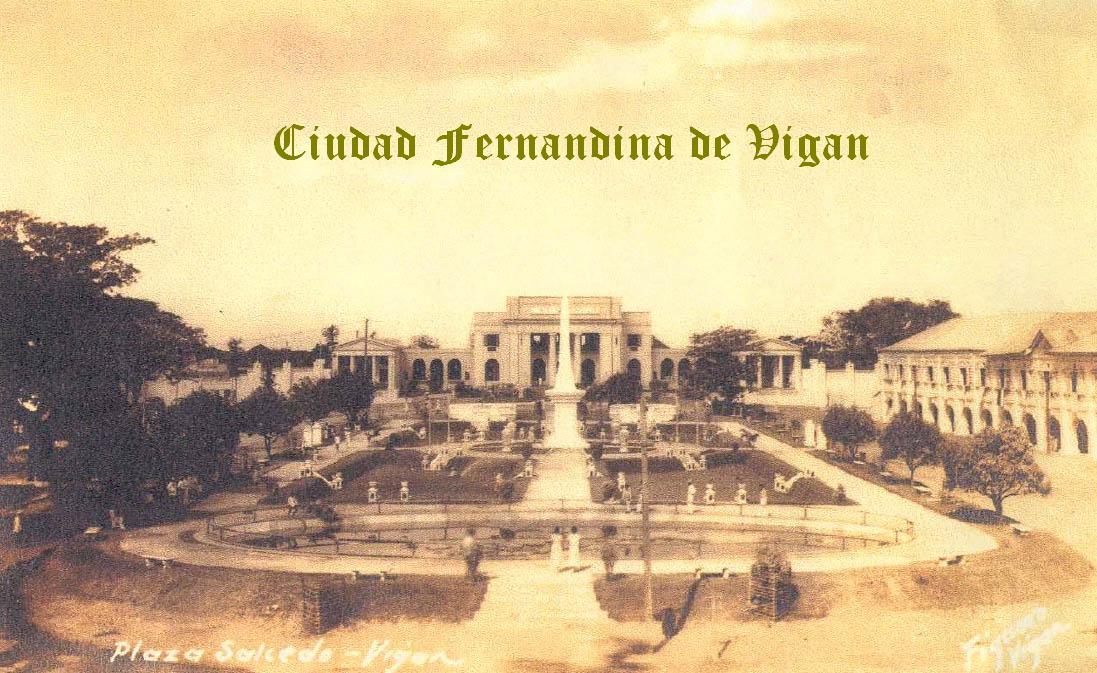
By this Royal Decree, Villa Fernandina which became the new seat of the Diocese automatically elevated its status as a City known as Ciudad Fernandina de Vigan in honor of the then current King of Spain. Source: http://www.santa.gov.ph